
Do More. Stress Less.
Let AI Handle It.
RAG Development Services
GInfomedia Solutions delivers custom Retrieval-Augmented Generation (RAG) development. Connect your company databases, PDFs, and document archives securely to LLMs for highly accurate, hallucination-free knowledge access.
Trusted AI automation partner for Secure RAG Systems, Vector Databases, and Semantic Knowledge Bases.
RAG Integration Features
Bridge the gap between static LLM knowledge and your dynamic, proprietary enterprise data.
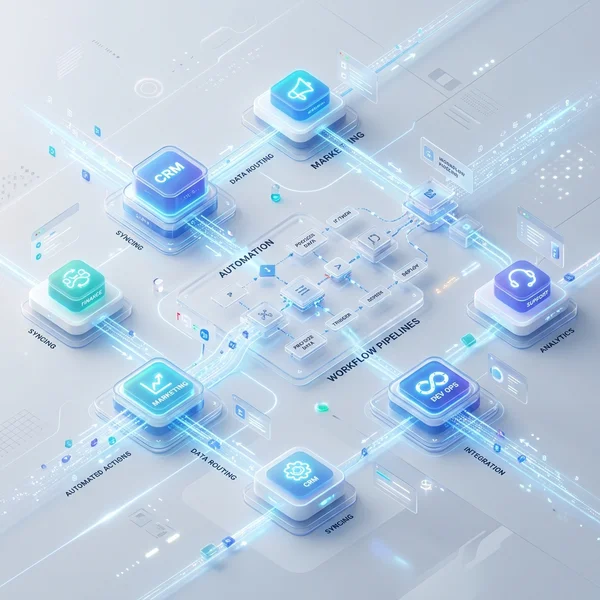
Enterprise Data Connectors
Ingest data from PDFs, Word docs, SQL/NoSQL databases, SharePoint, Google Drive, and internal intranets automatically.
Advanced Document Chunking
Apply semantic and layout-aware chunking algorithms to preserve context and improve retrieval precision.
Vector Database Optimization
Set up and tune production-ready vector stores like Pinecone, Milvus, Qdrant, or pgvector for sub-second retrieval latency.

Hybrid Search & Re-ranking
Combine keyword search (BM25) with vector embeddings and apply Cohere/Cross-Encoder re-rankers for relevant results.
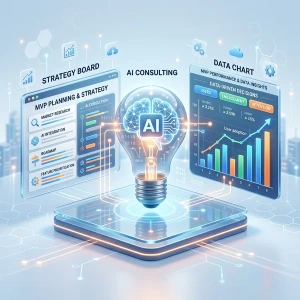
Hallucination Prevention
Configure system prompts and evaluation metrics (Ragas, TruLens) to ensure the LLM cites sources and stays grounded.

Access Control & Privacy
Enforce document-level access permissions, ensuring users only retrieve information they are authorized to see.
Why Businesses Invest in RAG Development Services
Retrieval-Augmented Generation (RAG) is essential for enterprises wanting to utilize LLMs without exposing sensitive data or risking hallucinations. By securely connecting your private PDFs, SQL databases, and internal knowledge bases to custom AI models, RAG ensures all responses are grounded in your actual business data. This delivers highly accurate search results and automated customer support. GInfomedia Solutions builds secure, role-based RAG architectures that scale with your document libraries.
What Does RAG Development Cost?
The cost of custom RAG development is determined by data volume, the diversity of document formats, vector database hosting choices, and semantic search complexity. We help you balance model quality, storage fees, and API costs to maximize search accuracy and return on investment.
Get RAG Development Cost Estimate
Our RAG Development Process
We follow a specialized data-engineering process to build high-performance, secure, and grounded RAG pipelines.
Map Private Data Sources & Schema
Data Cleansing & Chunking Optimization
Deploy Vector Database & Hybrid Search POC
Fine-Tune Embedding Models & Re-ranking
Implement Document-Level Access Controls
Deliver Grounded Semantic Search Engine
What Our
Clients Say

What Businesses Say About Our RAG Services
See how our Retrieval-Augmented Generation solutions helped clients secure their data and eliminate AI hallucinations.
Industries We Transform
Our RAG development services support knowledge-intensive industries that require accurate semantic search across vast document libraries.
Frequently Asked Questions About AI Automation
Learn how AI workflow automation can streamline operations, customer communication, and business processes.
What does RAG stand for, and how does it work?
RAG stands for Retrieval-Augmented Generation. It retrieves relevant information from your private documents or databases and feeds it to an LLM, ensuring the AI's responses are accurate and based strictly on your company data.
How does RAG prevent AI hallucinations?
By forcing the LLM to write answers using only the retrieved context from your validated database, RAG prevents the model from generating incorrect or made-up facts.
What kinds of data formats can we connect to a RAG system?
RAG systems can process PDFs, Word documents, text files, SQL/NoSQL databases, intranets, spreadsheets, and shared drives (like Google Drive or SharePoint).
Is our private data safe with a RAG pipeline?
Yes. We build RAG pipelines using private cloud infrastructure (AWS, Azure, or GCP) and secure vector databases, ensuring your data never leaves your enterprise boundary or trains public models.
